
What is the MOQ for custom silicone remote keypads?
Minimum order quantity is the first number every buyer asks about, and the honest answer is always "it depends on what you are actually ordering." A truly custom remote keypad — your own key layout, your own web geometry, your own legends — has a fundamentally different cost structure than a stock blank with your logo printed on it. FromRubber breaks this down so you can match your volume to the right manufacturing model and avoid overpaying.
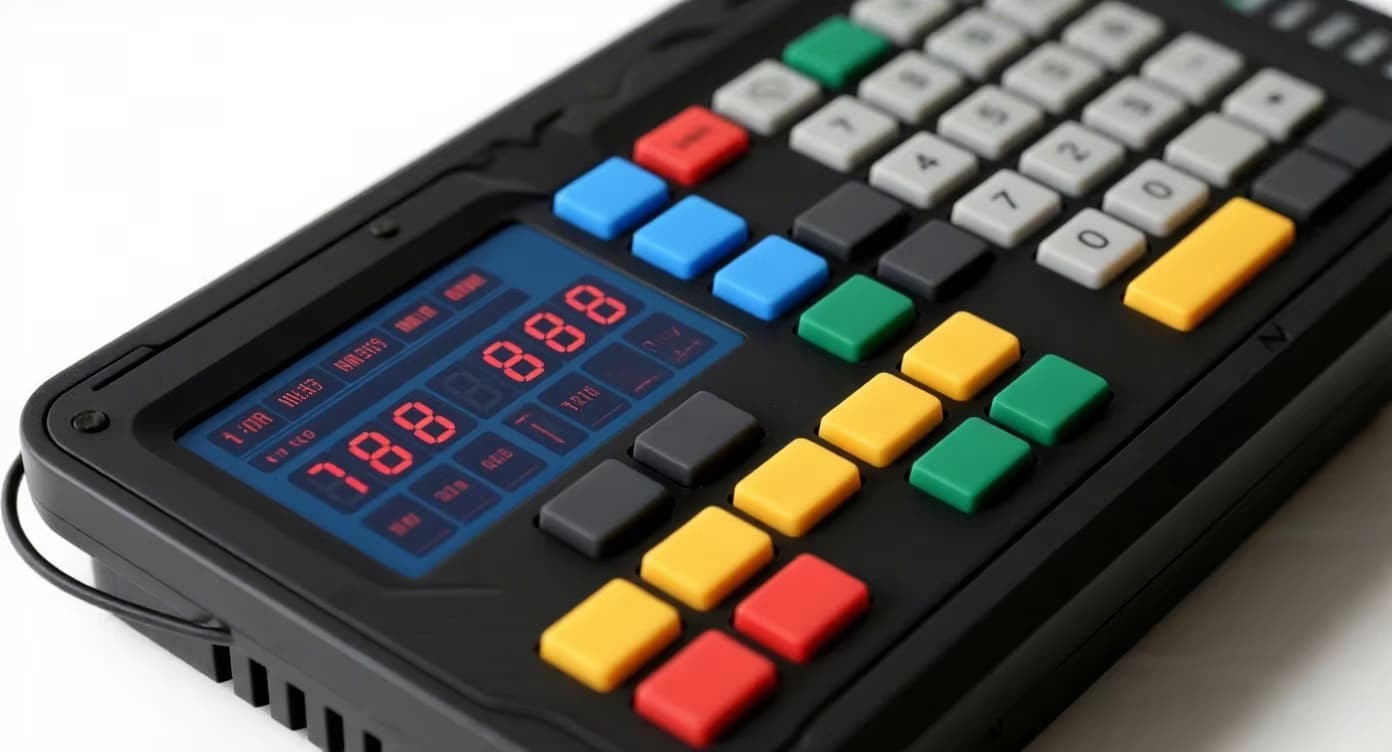
Four manufacturing models and their MOQ tiers
Your own key layout, web geometry, actuation force, and legends cut into a dedicated steel compression mold. Tooling costs $800-2,000 for standard remotes. At 500 pieces, tooling amortization adds $1.60-4.00 per unit, which is the floor most product budgets accept. This is what "custom silicone remote keypad" properly means.
A standard remote keypad layout (commonly 21-key TV remote) with your logo and legends pad-printed or laser-etched on top. No dedicated mold. Works for branding; does not work if you need your own key count, spacing, or tactile feel. Some suppliers advertise "100-piece custom" without disclosing this distinction — always ask: "Is a dedicated mold cut for my design?"
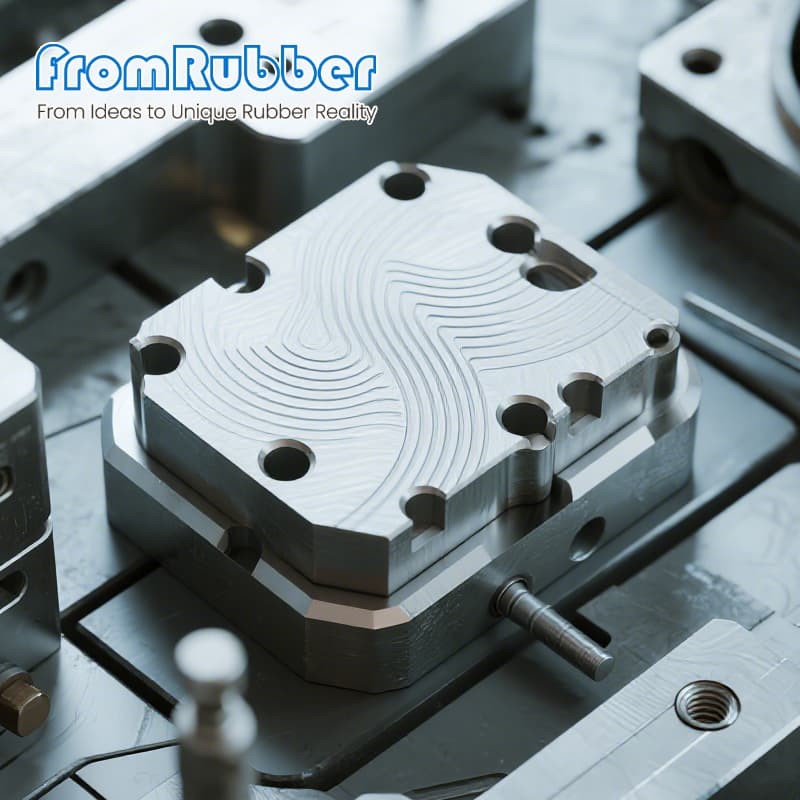
Aluminum or mild-steel mold that cuts 40-50% off tooling cost and 1-2 weeks off lead time. Good for 5,000-20,000 shots. FromRubber uses this route for pilot builds and market-validation runs, with a migration path to hardened steel tooling once volumes justify it.
Key geometry machined from silicone sheet without any mold. Tactile feel is approximate and per-unit cost is high ($5-15 per keypad), but it validates ergonomics and fit in days. Useful for trade-show demos and investor samples.

Why the 500-piece floor exists — and how to work around it
The MOQ is not arbitrary — it comes from four hard cost floors in silicone manufacturing:
FromRubber's standardized mold frame system helps push the custom-mold MOQ down to 500 pieces by reusing the outer mold frame across projects and only cutting a custom cavity insert — reducing insert cost to $800-1,500. For buyers who genuinely need sub-500 volume, soft tooling and CNC prototyping are legitimate alternatives.
Case study: 500-piece pilot run for a smart-home remote
A US startup needed a 15-key smart-home remote for a market-entry product. They had received quotes from three Chinese factories: one at 3,000-piece MOQ ($0.18/unit), one at 1,000-piece MOQ ($0.25/unit), and one trading company offering "100-piece custom" (which turned out to be a stock blank with their logo — wrong key layout entirely).
FromRubber structured a two-phase program. Phase 1: soft-tooling pilot run of 500 pieces at $0.38/unit with $900 tooling — total first-order cost $1,090. This gave them functional remotes for retail buyer demos and crowdfunding fulfillment. Phase 2 (triggered after their Kickstarter funded): migration to hardened steel tooling at 5,000-piece volume, dropping unit price to $0.19. The soft mold ran 8,000 shots without degradation before being retired. The client's total cost over 5,500 pieces was lower than ordering 3,000 upfront from the cheapest factory, because they avoided committing to high volume before validating demand.
MOQ and pricing reference by manufacturing model
Our advice: if you are still validating your remote's market fit, start with 500 pieces on soft tooling through FromRubber. If demand is proven, migrate to steel and scale to 5,000+ for the best unit economics. The worst outcome is committing to 3,000 pieces of a remote design you later need to change.
Related questions
Are you looking for a rubber and plastic product customization solutions manufacturer?
We can quickly provide customers with market analysis, technical support and customized services.Sign Up Out Newletter
