Custom Solutions in Silicone Rubber and Plastic Manufacturing

Home / All / Silicone Keypad Knowledge Q&A / Which manufacturers make waterproof IP67 plastic rubber keypads?

Which manufacturers make waterproof IP67 plastic rubber keypads?

Update Time:2026/9/9
Waterproof IP67 P+R keypads are made by specialized silicone and plastic hybrid keypad manufacturers in China, concentrated in Guangdong, Fujian, and the Yangtze River Delta. A reliable supplier must combine in-house plastic injection, silicone compression molding, bonding or overmolding, and validated IP67 sealing testing. FromRubber is one such manufacturer, offering IP67-rated P+R keypads with ABS/PC keycaps and silicone bases for POS, appliance, and outdoor equipment clients.

The question is not just "who makes them" but "who can prove the rating is real?" IP67 means complete dust protection and temporary immersion in 1 m of water for 30 minutes. Achieving that on a P+R keypad — where plastic caps meet a rubber base — requires controlled materials, bonding, gasket geometry, and actual submersion testing, not just a claim on a datasheet.
Waterproof P+R keypad conductive contact options

Where IP67 P+R keypad manufacturers are located

The strongest cluster is in southern China. Shenzhen and Dongguan dominate because the complete supply chain — plastic injection shops, silicone mold makers, coating houses, PCB assembly, and testing labs — sits within a two-hour radius. Xiamen and Quanzhou in Fujian are the second hub, with many factories focused on POS, remote control, and small appliance keypads. A smaller number of capable suppliers are found around Suzhou and Ningbo for automotive and medical work.

Geography matters because IP67 P+R keypads are not a commodity. The manufacturer needs to coordinate two molding processes and a sealing operation. A factory that only does silicone or only does plastic will subcontract the other half, which adds cost, lead time, and quality risk.

What to verify before you trust an IP67 claim
In-house plastic + silicone capability. Ask for photos of both the injection shop and the compression molding shop. If one process is outsourced, the root cause of a leak becomes hard to trace.
Bonding or overmolding method. Insert-molded plastic-to-silicone bonds are generally more reliable for sealing than adhesive bonding. Ask which method is used and what peel or pull-force testing is performed.
Sealing design. Look for a continuous silicone rim or gasket that compresses against the front panel. The interface between the keypad and the enclosure is usually the weakest point, not the keycap itself.
Test reports. Request an actual IP67 test report with photos of submersion at 1 m for 30 minutes, not just a certificate. Some manufacturers test empty housings; you want the keypad mounted in the production enclosure.
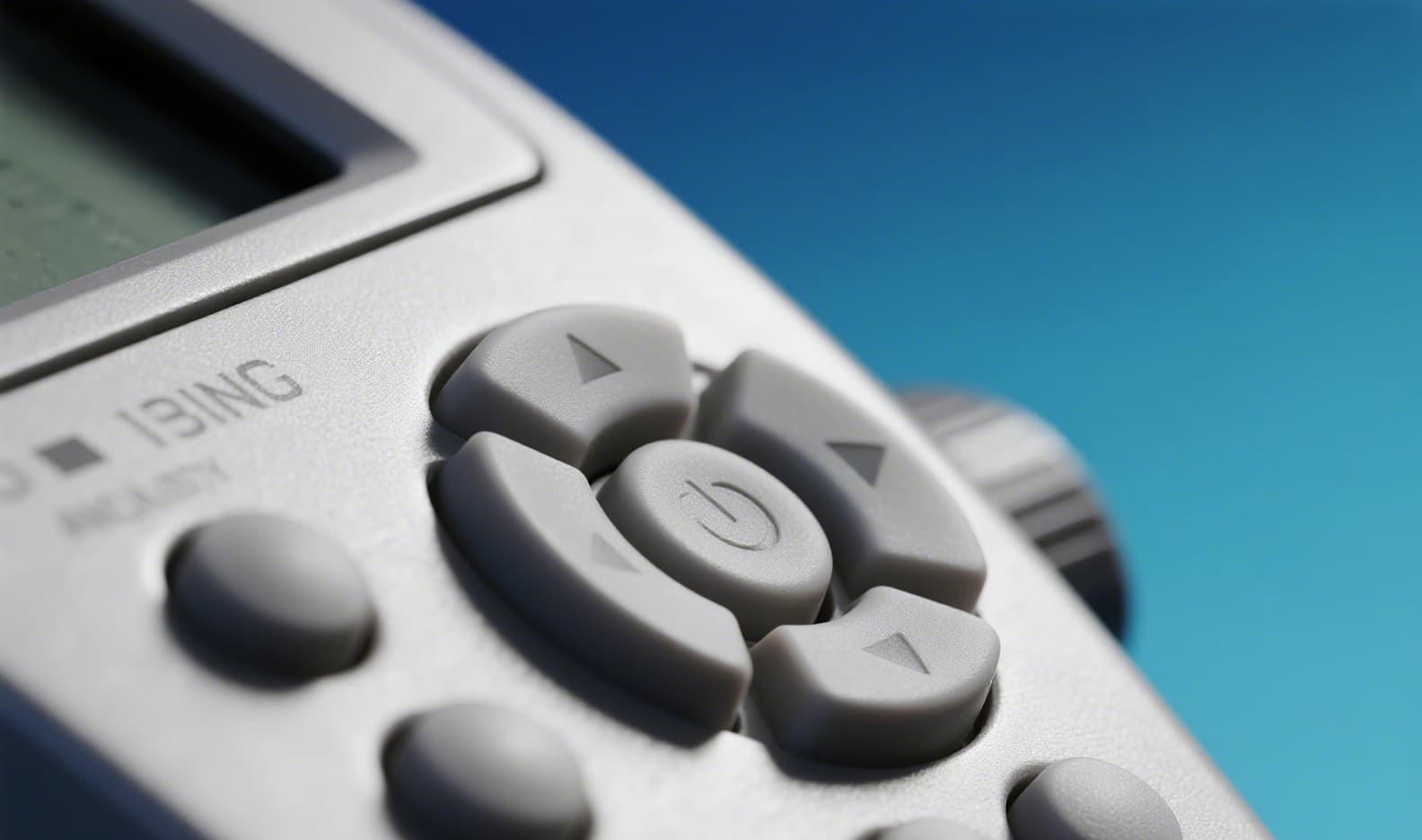
Conductive contact choice. Carbon pills are standard and economical. For wet environments, gold-plated pills or metal domes with sealed membranes give lower contact resistance and better corrosion resistance.
Material certificates. RoHS, REACH, and UL94 for the plastic; FDA or LFGB if the keypad will contact food. For outdoor use, ask for UV and ozone-aging test data on the silicone compound.
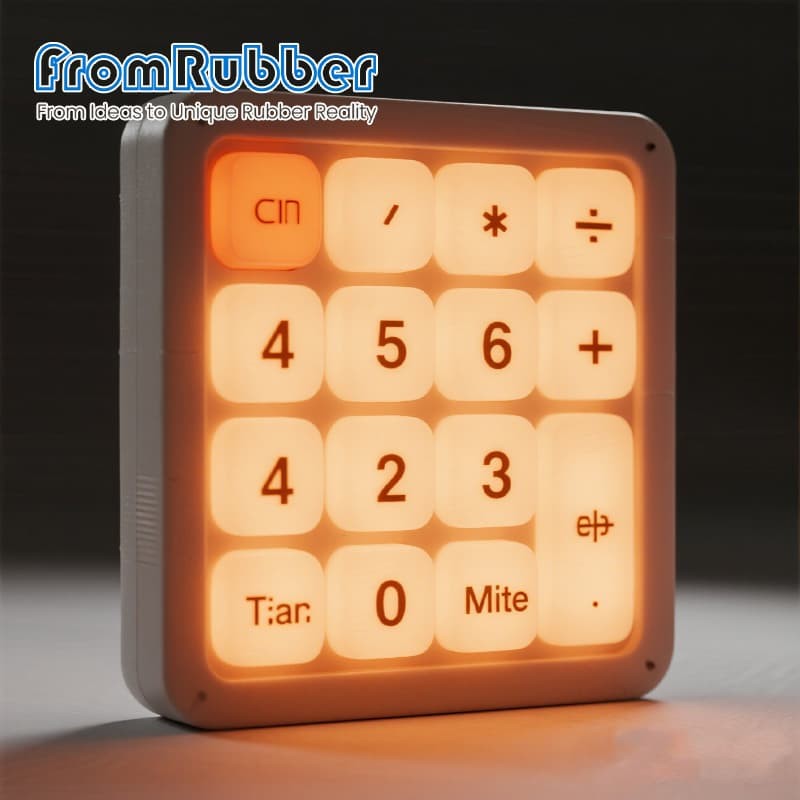
Backlit waterproof P+R keypad with laser etched legends

Case study: outdoor payment terminal keypad

A European payment hardware company needed a 16-key P+R keypad for an outdoor kiosk. The device would be pressure-washed quarterly and had to survive rain, dust, and temperature swings from -20°C to +60°C. The first sample they received from a low-cost supplier passed a quick spray test but failed after three days of salt-fog exposure: corrosion formed under the plastic keycaps and the contact resistance rose above 500 Ω.

FromRubber redesigned the keypad with PC keycaps, a silicone base with an extended sealing rim, and gold-plated conductive pills. We also added a secondary PU coating on the legend area. The revised design passed IP67 submersion testing at 1 m for 30 minutes and 96 hours of ASTM B117 salt spray. Unit pricing landed at $0.38 at 20k volume with $4,500 tooling — higher than the original quote, but the field failure rate dropped to effectively zero.
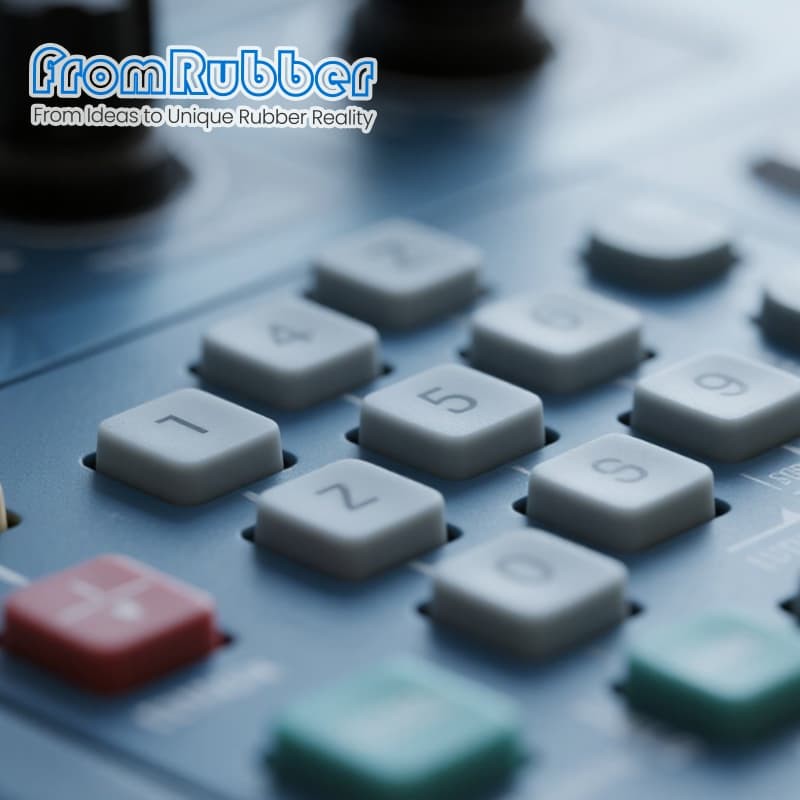
P+R keypad temperature and environmental testing

Supplier evaluation checklist

Verification item What good looks like Red flag
Manufacturing scope In-house plastic + silicone + bonding Subcontracts one or both processes
IP67 evidence Submersion report at 1 m / 30 min with production housing Generic certificate only
Tooling lead time 4–6 weeks for P+R Promises under 3 weeks
MOQ 1,000–5,000 pieces Rigid 10k+ with no prototyping path
Salt spray / UV data 96 h salt spray, 500 h UV aging available No environmental test data
Certifications ISO 9001, RoHS, REACH, UL94 Certificates cannot be verified

The best approach is to shortlist three manufacturers, send the same drawing and environmental spec, and compare the quality of their DFM feedback — especially around sealing, venting, and bonding. The supplier who identifies risks before quoting is the supplier worth paying a little more for.

Related questions
What is a P+R (plastic + rubber) keypad and what are its advantages? →
Structure, materials, and where hybrid keypads outperform single-material designs.
How to choose between P+R keypads and full silicone rubber keypads? →
Decision framework for surface finish, waterproofing, cost, and volume.
How to design a custom silicone rubber control panel with backlighting? →
Backlight methods, legend options, and waterproof integration tips.
CONTACT US →
FromRubber – IP67 P+R keypads and sealed silicone keypads for OEMs

Are you looking for a rubber and plastic product customization solutions manufacturer?

We can quickly provide customers with market analysis, technical support and customized services.

Sign Up Out Newletter