
How durable are custom silicone rubber keyboards for industrial use?
How durable are custom silicone rubber keyboards for industrial use?
Detailed Explanation: What Makes a Silicone Keypad Durable
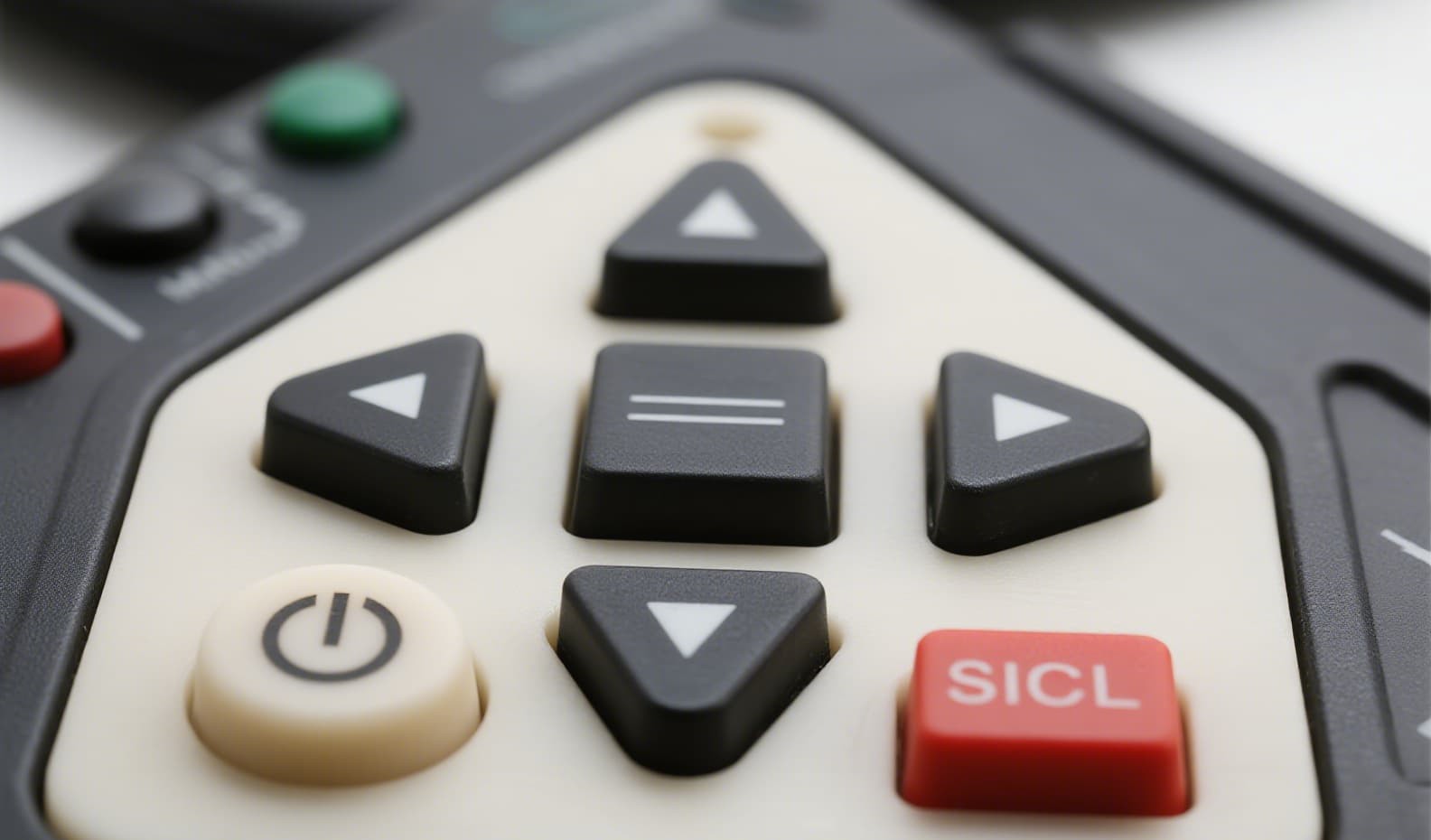
Industrial users demand more than a soft feel. They expect a keypad that survives glove operation, chemical cleaning, dust, UV, oil, and constant keystrokes for years. Silicone rubber is the most common solution because the elastomer absorbs impact, the legends are permanently bonded or laser-etched, and the sealed construction can be molded to IP67. But not every silicone keypad is durable. The five engineering parameters below determine whether a unit will last one year or ten.
1. Material Hardness (Shore A)
Shore A 50–70 is the industrial sweet spot. Softer silicone (40–50) feels premium but tears more easily under gloved thumbs. Harder silicone (75–85) lasts longer but transmits more shock to the PCB. For metering, automation, and outdoor panels, FromRubber usually specifies Shore A 60 ± 3 with a post-cure at 200 °C for 4 hours to stabilize compression set.
2. Actuation Force and Travel
Industrial panels commonly use 180–350 gf actuation with 1.0–2.0 mm travel. Higher force reduces accidental presses but increases operator fatigue; lower force feels modern but risks false triggers. The tactile ratio (snap force / actuation force) should be 1.4–1.8 for clear feedback.
3. Contact Technology
- Carbon pills – 10–200 Ω contact resistance, rated 1–5 million cycles, low cost. The default for industrial keypads.
- Metal domes – < 0.5 Ω contact, crisp click, 5 million+ cycles, best for low-voltage circuits and medical instruments.
- Conductive ink – silver or carbon-loaded ink printed directly, suitable for membrane/silicone hybrids.
4. Environmental Sealing (IP Rating)
Indoor panels can stop at IP54 (splash-resistant). Outdoor, food-grade, or washdown environments need IP65–IP67. Achieving IP67 requires a one-piece molded silicone gasket, controlled bezel compression (typically 20–30 %), and verified compression-set data on the silicone compound.
5. Post-Cure and Material Aging
Post-cure removes oligomers and stabilizes the silicone matrix, raising key life by 30–60 %. FromRubber's standard post-cure is 4 h at 200 °C in a calibrated oven. Skip this step on consumer keypads and the legends and tactile snap drift within months.
Case Study: Heavy-Duty Welding-Machine Control Panel
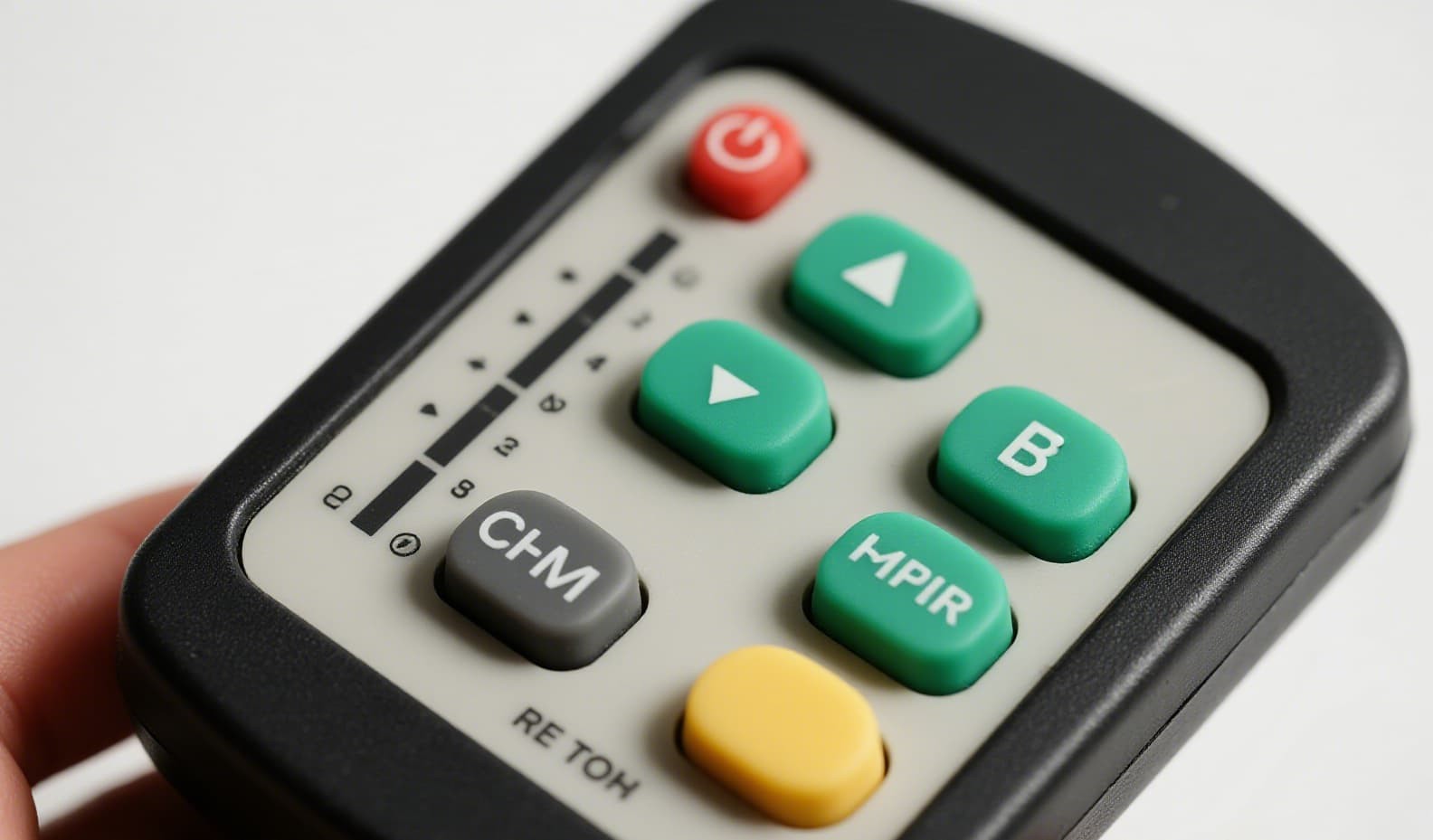
Welding-machine controller, 18 keys, hot-workshop environment
A Czech welding-equipment OEM approached FromRubber with field complaints that the previous membrane keypad cracked at the corners after only 14 months on shop floors. The replacement needed to survive steel-grit dust, weld-spatter heat, daily IPA cleaning, and 4–6 hours of continuous operator use.
FromRubber delivered a Shore A 65 silicone keypad with metal-dome tactile contacts, laser-etched legends, and a one-piece molded seal rib. The keypad is held to the housing with twelve integrated retention nubs, sealing compression is held at 25 %, and the post-cure is 4 h at 200 °C. Validation results: 1.5 million actuations without tactile decay, IP67 after 1,000 thermal cycles (–20 °C to +85 °C), and zero print wear after 10,000 IPA wipes. Production has run for 30 months without a single field return related to the keypad.
Data: Lifecycle and Specification Benchmarks
| Parameter | Typical Range | FromRubber Industrial Standard | Validation Standard |
|---|---|---|---|
| Shore A hardness | 30 – 80 | 50 – 70 (±3) | ASTM D2240 |
| Actuation force | 80 – 500 gf | 180 – 350 gf | Force-displacement curve |
| Travel | 0.5 – 3.0 mm | 1.0 – 2.0 mm | Internal STD-FR102 |
| Cycle life (carbon pill) | 1 – 5 million | ≥ 1,000,000 | ASTM D4060 accelerated |
| Cycle life (metal dome) | 3 – 10 million | ≥ 5,000,000 | OEM cycle rig |
| Operating temperature | –40 °C to +250 °C | –40 °C to +180 °C | IEC 60068-2-14 |
| IP rating | IP54 – IP68 | IP65 – IP67 | IEC 60529 |
| Post-cure | 2 – 8 h | 4 h @ 200 °C | Internal STD-FR204 |
| UV resistance | 500 – 2,000 h | ≥ 1,000 h QUV | ASTM G154 |
| Chemical wipe resistance | 2,000 – 50,000 wipes | ≥ 10,000 IPA wipes | IEC 60068-2-70 |

Case Study: Five-Year Field Return Audit
Industrial HVAC keypad fleet, 14,000 units, 5-year audit
FromRubber retrofitted a 14,000-unit HVAC control panel fleet with laser-etched, Shore A 65 silicone keypads. After 5 years of continuous service, the field-return rate was 0.18 %, all attributed to actuator drift on membrane switches rather than keypad wear. Tactile force on the worst-case unit measured within ± 6 % of nominal — well inside the ± 15 % spec.
How FromRubber Validates Industrial Durability
Every industrial keypad program at FromRubber follows a four-stage verification protocol: (1) design review against the target lifecycle and environment; (2) prototype samples validated on our automated 16-key rigs up to 5 million cycles; (3) environmental chamber sweep (–40 °C to +180 °C); (4) field pilot of 50–100 units before mass production. Reports are attached to every first-article shipment.
If you are specifying a keypad for an industrial platform, send us your operating environment, lifecycle, and any cleaning chemicals used. We will return a recommended material set with a sample for in-house testing within five working days.
CONTACT US · Request a Durability Sample
Related Questions
Are you looking for a rubber and plastic product customization solutions manufacturer?
We can quickly provide customers with market analysis, technical support and customized services.Sign Up Out Newletter
